Irene (a)
Application:
Problems involving multiplicative relationships
Irene buys a box of %c% coloured pencils for $ %d%. Jacob buys %j% of these same boxes. How many coloured pencils did Jacob buy?
 Students’ Problem Solving and Transitioning from Numerical to Relational ThinkingLa Genèse De La Pensée Algébrique Chez Les Enfants De Trois À Huit Ans.Some multiplicative structures in elementary education: a view from relational paradigmSome multiplicative structures in elementary education: a view from relational paradigm
 Cognitive routes of algebraic thinking in preschool and elementary school: Litterature review.
 Regards croisés sur l’apprentissage des mathématiques. Le cas de la Théorie des situations didactiqu…
 Middle School students’ difficulties in problem solving and their roots in elementary education: Wha…
 La genèse du raisonnement algébrique au début de l’apprentissage des mathématiques
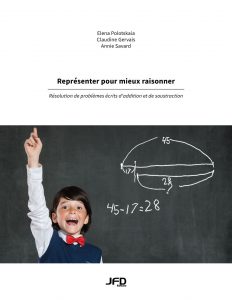 Représenter pour mieux raisonner
 Planification à long terme et la résolution de problèmes: une réflexion sur l’expérimentation réalis…
 Visual representations of multiplicative relationships by students learning mathematics
 Colloquium: Foregrounding Davydov’s curriculum: Relational approach and algebraic thinking in early …Multiplicative structures in elementary school mathematics: Relational approach
 Using the Relational Paradigm: effects on pupils’ reasoning in solving additive word problems
 Using a computer-based learning task to promote work on mathematical relationships in the context of…
 How the relational paradigm can transform the teaching and learning of mathematics: Experiment in Qu…Who’s wrong? Tasks fostering understanding of mathematical relationships in word problems in element…
 Investigating a case of hidden misinterpretations of an additive word problem: structural substituti…
 Technopédagogie et apprentissage actifInvestigating a case of hidden misinterpretations of an additive word problem: Structural substituti…
 Duality of Mathematical Thinking When Making Sense of Simple Word Problems : Theoretical Essay
 Gérer l’accès aux mathématiques dans la résolution de problèmes textuels : une exploration du côté d…
 La résolution de problèmes de structures additives chez les élèves du premier cycle du primaire : le…Des représentations graphiques dans l’enseignement des mathématiques-Deux jeux pour apprendre
 Two Scenarios for Problem Solving and Pro-algebraic Reasoning Development in Primary School Children
 Why is a negative x a negative = a positive?
 Développement du raisonnement algébrique par résolution de problèmes textuels chez les enfants au pr…Développement du raisonnement algébrique par résolution de problèmes textuels chez les enfants au pr…
Irene buys a box of %c% coloured pencils for $ %d%. Jacob buys %j% of these same boxes. How many coloured pencils did Jacob buy?
At a fundraising event, a company donated $ %d% to complement the donation of %6% individuals who contributed $ %t% in total. How many times larger was the company’s donation than the contributions of the %6% individuals?
At a fundraising event, a company gives %c% times the amount donated by the rest of the guests to charity. At the end of the day, the guests donated $ %d%. How much did the company donate?
At a fundraising event, a company gives %c% times the amount donated by the rest of the guests to charity. At the end of the day, the company donated $ %d%. How much did the rest of the guests donate?
At a garage sale, Martin bought a bike, a helmet, and gloves. He paid $ %t% in total for all three items. The gloves cost $ %g% less than the helmet. How much more money did Martin spend on the bike than on the helmet, if the helmet cost $ %h%?
At a garage sale, Martin bought a bike, a helmet, and gloves. The gloves cost $ %l% less than the helmet. The helmet cost $ %h% less than the bike. How much did Martin pay in total for all three items, if the gloves cost $ %g%?
Numbers just in case: %1%, %2%, %3%, %4%, %5%
At a garage sale, Martin bought a bike, a helmet, and gloves. He paid $ %t% in total for all three items. The gloves cost $ %g% less than the helmet. The helmet cost $ %h% less than the bike. How much did Martin pay for the helmet?
Numbers just in case: %1%, %2%, %3%, %4%, %5%
For the tulip festival, the city’s employees planted lots of tulips in a park. In the second park, they planted %a% fewer tulips than in the first park. In the third park, they planted %b% more tulips than in the second park. How many more tulips did the employees plant in the third park than in the first park?
For the tulip festival, the city’s employees planted lots of tulips in a park. In the second park, they planted %a% more tulips than in the first park. In the third park, they planted %b% fewer tulips than in the second park. How many more tulips did the employees plant in the third park than in the first park?
Camille has %c% balloons. Each balloon costs %d% cents. Marie gives some of her balloons to Camille. She now has %b% balloons. How many balloons did Marie give to Camille?
Justin paid $%j% for half a kilogram of candies. Sara bought the same candies and paid $%s%. What is the weight of Sara’s candies?
Numbers just in case: %1%, %2%, %3%, %4%, %5%
Sara bought %n%kg of candies and paid $%p%. Justin bought a half a kilogram of these same candies. How much did he pay?
Numbers just in case: %1%, %2%, %3%, %4%, %5%
Justin paid $%p% for half a kilogram of candies. What would be the price of %n%kg of these same candies?
Numbers just in case: %1%, %2%, %3%, %4%, %5%
The %s% students from an elementary school participated in different sporting events. Two sevenths of the students played hockey. %t% times more students played basketball than hockey. How many students played basketball?
Numbers just in case: %1%, %2%, %3%, %4%, %5%, %7%
Eric needs to travel a certain distance to his final destination in 4 days. On the first day, he traveled a third of the total distance. On the second day, he traveled a quarter of the total distance. On the third day, he traveled only %20% percent of the remaining distance. On the fourth day, he traveled the rest of the distance. How many times smaller is the distance Eric traveled on the fourth day than the total distance he traveled?
Numbers just in case: %1%, %2%, %3%, %4%, %5%, %50%, %60%, %70%, %80%, %120%
Nicolas, Pierre, and Jacques caught a lot of fish during their fishing trip. Nicolas said, “Together, Jacques and I caught five-sevenths of the total number of fish.” Pierre said, “I caught %p% fish.” How many fish did Nicolas and Pierre catch together?
Numbers just in case: %1%, %2%, %3%, %4%, %5%, %6%, %7%
Nicolas, Pierre, and Jacques caught a lot of fish during their fishing trip. Nicolas said, “Together, Jacques and I caught five-sevenths of the total number of fish. Jacques caught %j% fish whereas I caught %n% fish.” How many fish did Pierre catch?
Numbers just in case: %1%, %2%, %3%, %4%, %5%, %6%, %7%,
Nicolas, Pierre, and Jacques caught a lot of fish during their fishing trip. Nicolas said, “Together, Jacques and I caught five-sevenths of the total number of fish.” Pierre said, “I caught %p% fish.” In total, how many fish did the three friends catch together?
Numbers just in case: %1%, %2%, %3%, %4%, %5%, %6%, %7%
In a basket, there are apples and oranges. Oranges make up %p% percent of the total fruits in the basket. Julie added more oranges to double the total number of oranges in the basket. What percentage represents the proportion of apples in the basket compared to the overall number of fruits?
Numbers just in case: %1%, %2%, %4%, %5%, %100%
A gumball machine contains %l% lemon-flavored gumballs, %s% strawberry-flavored gumballs, and some cherry-flavored gumballs. We know that there is a two in five chance of getting a cherry-flavored gumball. How many cherry-flavored gumballs are in the gumball machine?
Numbers just in case: %1%, %2%, %3%, %4%, %5%
David is %d% years old. His uncle, Gaëtan, is %g% years old. In how many years will Gaëtan be %t% times older than David?
Numbers just in case: %1%, %2%, %3%, %4%, %5%
Guillaume has a collection of photos from his hometown placed in %b% different binders. He brings %p% photos to school. He shows them to his friends while saying, “These photos represent only two-fifths of the photos I left at home.” In total, how many photos does Guillaume have in his collection?
Find the solution using the fewest steps.
Numbers just in case: %1%, %2%, %3%, %4%, %5%
Guillaume has a collection of photos from his hometown placed in %b% different binders. He brings %p% photos to school. He shows them to his friends while saying, “These photos represent only two-fifths of my total collection.” How many photos has Guillaume not shown to his friends?
Find the solution using the fewest steps.
Numbers just in case: %1%, %2%, %3%, %4%, %5%
Joanie, a %y% year old girl, wants to buy a guitar to learn music. She has already saved $%s%. Her generous parents agreed to pay the remaining amount. What was the total price of the guitar, if her parents gave her three quarters of the guitar’s total price?
Numbers just in case: %1%, %2%, %4%, %5%
Joanie, a %y% year old girl, wants to buy a guitar to learn music. She already saved a quarter of the instrument’s price. Her generous parents agreed to pay the remaining amount. What was the price of the guitar, if her parents gave her $%p%?
Numbers just in case: %1%, %2%, %3%, %4%, %5%
Last year, I planted %t% tulips and %d% daffodils. This year, I saw that %b% of my tulips bloomed. How many fewer daffodils did I plant than tulips?
Numbers just in case: %1%, %2%, %3%, %4%, %5%
Last year, I planted %t% tulips and %d% daffodils. This year, I saw that %b% of my tulips bloomed. What fraction represents the number of tulips that bloomed?
Numbers just in case: %1%, %2%, %3%, %4%, %5%
Last year, I planted %t% tulips and %d% daffodils. This year, I saw that only one-third of my tulips bloomed. How many of my tulips bloomed?
Numbers just in case: %1%, %2%, %3%, %4%, %5%
In my garden, I observed %t% tulips and %d% daffodils in bloom. Surprisingly, this is only one-third of the total number of tulips that I planted. In total, how many tulips did I originally plant?
The numbers just in case: %1%, %2%, %3%, %4%, %5%
During an auction, a painting was initially valued at $%v%. During the bidding, the painting sold for more money than its initial value. The auctioneer made $%s% from the sale for his services, while the artist earned $%a%. How many times more was the painting sold for than its initial value?
The numbers just in case: %1%, %2%, %3%, %4%, %5%
During an auction, the value of a painting tripled. The auctioneer made $%s% from the sale for his services, while the artist earned $%a%. What was the initial value of the painting?
The numbers just in case: %1%, %2%, %3%, %4%, %5%
During an auction, the value of a painting tripled. The auctioneer made $%s% from the sale for his services while the artist earned $%a%. What is the difference between the initial value of the painting and the price it was eventually sold for?
The numbers just in case: %1%, %2%, %3%, %4%, %5%
During an auction, a painting was initially valued at $%v%. However, during the bidding, the painting sold for more money than its initial value. The auctioneer made $%s% from the sale for his services, while the artist earned $%a%. What is the difference between the initial value of the painting and the price it was eventually sold for?
The numbers just in case: %1%, %2%, %3%, %4%, %5%
During an auction, a painting was valued at $%v%. During the bidding, the painting sold for triple its value. The auctioneer made $%a% off the painting for his services. How much did the artist receive after the painting was sold?
The numbers just in case: %1%, %2%, %3%, %4%, %5%
In Mary-Ann’s garden, there are %r% roses and %l% lilacs. How many more roses does she have than lilacs?
In Mary-Ann’s garden, there are %r% roses and %l% lilacs. How many times more roses does she have than lilacs?
Claude is %c% years old. He is %b% times older than Jean. How old is Jean?
Claude is %c% years old. He is %b% years older than Jean. How old is Jean?
A bee named Maya visited %m% flowers to collect nectar. Her friend Fifi visited %l% times fewer flowers than her. How many flowers did Fifi visit?
A bee named Maya visited multiple flowers to collect nectar. Her friend Fifi visited only %f% flowers, which is %l% fewer flowers than Maya. How many flowers did Maya visit?
Caroline filled her favorite glass with %v% mL of milk. If the glass is filled to the top, it can hold %t% mL of liquid. What fraction represents the quantity of milk she will drink?
Numbers just in case: %1%, %2%, %3%, %4%, %5%
Caroline filled two-thirds of her favorite glass with some milk. This means that she will drink %v% mL of milk. When the glass is filled to the top, how many mL of liquid can it hold?
Numbers just in case: %1%, %2%, %3%, %4%, %5%
Caroline filled two-thirds of her favorite glass with some milk. If the glass was filled to the top, it could hold %v% mL of liquid. How many mL of milk will Caroline drink?
Numbers just in case: %1%, %2%, %3%, %4%, %5%
Xavier spent the money he received for his birthday at the electronics store and the sports store. He spent %t% fifths of his money at the sports store. What fraction represents the money he spent at the electronics store?
Numbers just in case: %1%, %2%, %3%, %4%, %5%
There are two times as many books on the first bookshelf than on the second bookshelf. Nicolas counted %b% more books on the third bookshelf than on the second bookshelf. How many books were on the first bookshelf if, on all three bookshelves, there were a total of %t% books?
Numbers just in case: %1%, %2%, %3%, %4%, %5%
A calf is %n% times heavier than a goat. A dog weighs a quarter of a goat’s weight. In total, how much do all three animals weigh, if the calf weighs %c% kg?
Numbers just in case: %1%, %2%, %3%, %4%, %5%
A calf, a goat, and a dog weigh %t% kg in total. The calf is three times heavier than the goat. The dog weighs a quarter of the goat’s weight. How heavy is the calf?
Numbers just in case: %1%, %2%, %3%, %4%, %5%, %12%, %14%, %17%.
There was %n% times more water in the first barrel than in the second. After we added %f% L of water to the first barrel and %s% L of water to the second barrel, there was a total of %t% L of water in both barrels. How many L of water did the first barrel have in the beginning?
Numbers just in case: %1%, %2%, %3%, %4%, %5%
In a music school, there are %t% students in total. Of these students, %a% girls play either the piano or the violin. In total, %p% students play piano at this school. We also learned that there are two times more girls that play piano than the violin. How many boys play piano at this school?
Numbers just in case: %1%, %2%, %3%, %4%, %5%
A puzzle expert explained his age to a group of people. He said “first, triple the age that I will be in %a% years. Then, remove triple the age I was %b% years ago and you will get my actual age.” How old is the puzzle expert?
Numbers just in case: %1%, %2%, %3%, %4%, %5%
In the city of Trois-Îles, %t% students attend the %3% elementary schools. %l% students attend Little Thinkers school. At Sunshine Academy, there are %m% more students than at Little Thinkers. How many students attend the third school, Friendship School?
Numbers just in case: %1%, %2%, %3%, %4%, %5%
In the city of Trois-Îles, %t% students attend the %3% elementary schools. %l% students attend Little Thinkers school. Friendship School has %f% fewer students than Sunshine Academy. How many students attend Sunshine Academy?
Numbers just in case: %1%, %2%, %3%, %4%, %5%
In the city of Trois-Îles, there are %3% elementary schools. %l% students attend the school Little Thinkers. At Sunshine Academy, there are %s% more students than at Little Thinkers. At Friendship School, there are %t% fewer students than at Sunshine Academy. In total, how many students attend all three schools?
A person buys a raincoat, a hat, and rubber boats for $%p% in total. The raincoat costs $%r% more than the hat, and the hat and the raincoat together cost $%f% more than the boots. How much were the boots?
Numbers just in case: %1%, %2%, %3%, %4%, %5%
A person buys a raincoat, a hat, and rubber boats for $%p% in total. The raincoat costs $%r% more than the hat, and the hat and the raincoat together cost $%f% more than the boots. How much was the hat?
Numbers just in case: %1%, %2%, %3%, %4%, %5%
A person buys a raincoat, a hat, and rubber boats for $%p% in total. The raincoat costs $%r% more than the hat, and the hat and the raincoat together cost $%t% more than the boots. How much was the raincoat?
Numbers just in case: %1%, %2%, %3%, %4%, %5%
Benjamin has %b% marbles. His friend, Denis, has less marbles than him. Denis has %d% marbles. Benjamin gives Denis a certain number of marbles. Now, Benjamin has %l% fewer marbles than Denis. How many marbles did Benjamin give to Denis?
Numbers just in case: %1%, %2%, %3%, %4%, %5%
Benjamin has %b% marbles. His friend, Denis, has %d% marbles. Benjamin gives %g% marbles to Denis. Now, how many fewer marbles does Benjamin have than Denis?
Benjamin has %b% marbles. His friend, Denis, has less marbles than him. Benjamin gives %g% marbles to Denis. Now, Benjamin has %f% fewer marbles than Denis. How many marbles did Denis have in the beginning?
Antoine collects small cars. He believes that he has %m% more cars than his friend, Serge. Antoine owns %a% small cars. How many fewer cars does Serge have than Antoine?
Antoine collects small cars. He believes that he has %m% more cars than his friend, Serge. Antoine owns %a% small cars. How many cars do both friends have altogether?
Antoine collects small cars. He believes that he has %m% more cars than his friend, Serge. Serge owns %s% small cars. How many cars do both friends have altogether?
Melanie bought some yellow apples, some green apples, and %p% yellow pears. She counts her fruits and says, “I bought %y% yellow fruits and %g% green fruits”. How many apples did Melanie buy?
Melanie bought %a% apples and %p% yellow pears. Some of these apples were yellow and %g% were green. How many fruits did Melanie buy?
Melanie bought %a% apples and %p% yellow pears. Some of these apples were yellow and %g% were green. How many yellow fruits did Melanie buy?
During winter, lots of snow fell. In December, %d% cm of snow and %r% mm of rain fell. In January, more snow fell. In February, %f% cm of snow fell. In total during the %3% winter months, %a% cm of snow fell. How many fewer cm of snow fell in December than in January?
During winter, lots of snow fell. In December, %d% cm of snow and %r% mm of rain fell. In January, it snowed %m% more cm than in December. In February, %f% cm of snow fell. How many cm of snow fell during the %3% winter months?
During winter, lots of snow fell. In December, %d% cm of snow and %r% mm of rain fell. In January, it snowed %j% more cm than in December. In February, more snow fell. How many cm of snow fell in February if in total, %a% cm of snow fell during the %3% winter months?
Marie has an uncle and a grandfather. Her uncle, John, is %g% years younger than her grandfather. Her grandfather is %f% years older than Marie. How old is John if her grandfather is %a% years old?
Marie has an uncle and a grandfather. Her uncle, John, is %g% years younger than her grandfather. Her grandfather is %f% years older than Marie. How old is Marie if John is %j% years old?
Marie is %m% years old. Her uncle, John, is %g% years younger than her grandfather. Her grandfather is %f% years older than Marie. How old is John?
This spring, Justin planted strawberries in his garden. Monday, he picked some strawberries and his sister ate %a% of these strawberries. Tuesday, he picked %b% strawberries and his sister ate %c% of these strawberries. Justin used the %d% remaining strawberries after the %2% days, to make a tart. How many strawberries did he pick on Monday?
This spring, Justin planted strawberries in his garden. Monday, he picked %a% strawberries and his sister ate %b% of these strawberries. Tuesday, he picked %c% strawberries and his sister ate %d% of these strawberries. Justin used the remaining strawberries after the %2% days, to make a tart. How many strawberries did he use to make his tart?
This spring, Justin planted strawberries in his garden. Monday, he picked %a% strawberries and his sister ate %b% of these strawberries. Tuesday, he picked %c% strawberries and his sister ate some more of these strawberries. Justin used the remaining %d% strawberries after the %2% days, to make a tart. How many strawberries did his sister eat on Tuesday?
Roula goes to the fair. She pays $%a% to play a juggling game. She spends money to play a game of darts. She then pays to participate in the strength competition. This costs $%b% more than what she paid to juggle. Her parents gave her $%c% for the day. She is left with $%d% by the end of the day. How much money did she pay to participate in the darts game?
Roula goes to the fair. She pays to participate in a juggling game. She spends $%b% to play a game of darts. She then pays to participate in the strength competition. This costs $%c% more than what she paid to juggle. Her parents gave her $%d% for the day. She is left with $%e% by the end of the day. How much did she pay for the juggling game?
The numbers just in case: %1%, %2%, %3%, %4%, %5%
Roula goes to the fair. She pays $%a% to play a juggling game. She spends $%b% to play a game of darts. She then pays to participate in the strength competition. This costs $%c% more than what she paid to juggle. Her parents gave her $%d% for the day and her brother paid for the rest of her activities. How much money did her brother spend?
Roula goes to the fair. She pays $%a% to play a juggling game. She spends $%b% to play a game of darts. She then pays to participate in the strength competition. This costs $%c% more than what she paid to juggle. Her parents gave her $%d% for the day. How much money does she have left at the end of the day?
The butcher received %a% kg of fresh meat this morning. At noon, he realized that he still had some meat left. “So, I have sold %b% kg of meat more than what I have left”, said the butcher. How much meat did he sell in the morning?
The numbers just in case: %1%, %2%, %3%, %4%, %5%
The butcher received %p% packages of fresh meat this morning. At noon, he realized that he had %d% kg of this meat left. “So, I have sold %a% kg of meat more than what I have left”, said the butcher. How much meat did he receive in the morning?
Sophie helped her mother clean up their library. Together, they organized a large number of novels and %p% poetry books. Sophie had to repair %r% books because they were too old. The %h% other books were in good shape and did need any repairs. How many more novels does Sophie have in her library than poetry books?
Sophie helped her mother clean up their library. Together, they organized a large number of novels and %p% poetry books. Sophie had to repair %r% books because they were too old. The %h% other books were in good shape and did not need any repairs. In total, how many books are in her library?
Sophie helped her mother clean up their library. Together, they organized %n% novels and %p% poetry books. Sophie had to repair %r% books because they were too old. How many books did she not need to repair?
The actual length of the exterior of a rectangular house is %l% meters long. The actual height of this house is %h% meters. The base of this house is proportionally represented on a piece of paper by a rectangle that is %a% cm long and %b%cm wide. What is the actual width of this house, considering these proportions?
Genevieve knit wool hats and %t% times as many pairs of knit socks. She used %a%g of wool for each hat and %b%g of wool for each pair of socks. In total, how many grams of wool did she use if she knit %m% pairs of socks?
Genevieve knit wool hats and %t% times as many pairs of knit socks. She used %a%g of wool for each hat and %b%g of wool for each pair of socks. In total, she used %s%g of wool. How many hats did she knit?
Genevieve knit wool hats and %t% times as many pairs of knit socks. She used %a%g of wool for each hat and %b%g of wool for each pair of socks. In total, she used %c%g of wool. How many pairs of socks did she knit?
This year, %s% students from Winners School participated in competitions and they won %m% medals in the math competitions. Next year, they want to win double the number of medals as this year, which would be %f% times more medals than they won last year. How many medals did they win last year?
The numbers just in case: %1%, %2%, %3%, %4%, %5%
Last year, %s% students from Winners School participated in multiple competitions and they won %m% medals. This year, %t% students participated in the same competitions and they won %f% times more medals than last year. Next year, they predict that they will have %d% times more student participants than this year and they predict that they will double the amount of medals that they will win. How many more students will participate in the competition next year than last year?
Last year, %s% students from Winners School participated in multiple competitions and they won many medals. This year, %t% students participated in the same competitions and they won %f% times more medals than last year. Next year, the school wants to win %d% times more medals than they won this year. If they do win all these medals, how many times more medals will the school win next year than last year?
Last year, %s% students from Winners School participated in multiple competitions and they won %m% medals. This year, %g% students participated in the same competitions and they won %f% times more medals than last year. Next year, the school wants to win %n% medals. How many medals does the school want to win next year?
Last week, it rained %f% times as much as this week. We are predicting %m% millimeters of rain for next week. This week, it rained %t% millimeters. How many millimeters of rain are predicted for next week?
The numbers just in case: %1%, %2%, %3%, %4%, %5%
Last week, %l% millimeters of rain fell, whereas this week, only %t% millimeters of rain fell. We are predicting %m% millimeters of rain for next week. How many times more millimeters of rain fell last week than this week?
The numbers just in case: %1%, %2%, %3%, %4%, %5%
Last week, it rained twice as much as this week. Last week, %n% millimeters of rain fell. Next week, we are predicting %m% millimeters of rain. How many millimeters of rain fell this week?
The numbers just in case: %1%, %2%, %3%, %4%, %5%
Last week, it rained twice as much as this week. Next week, we are predicting %m% millimeters of rain. This week, we had %t% millimeters of rain. How many millimeters of rain fell last week?
The numbers just in case: %1%, %2%, %3%, %4%, %5%
Grandfather Réjean needs to move %b% bags of cucumbers from his garden to his barn. He calls his grandchildren to help him out. His grandchildren work in pairs to move the bags. Each of the pairs receives %p% bags to move. How many grandchildren does Réjean have?
The numbers just in case: %1%, %2%, %3%, %4%, %5%
In a line, Carol is standing in the %c%th spot, if we are counting from the end of the line. In front of her, there are %f% times more children than behind her. In total, there are %g% girls in line. How many boys are there in the line?
The numbers just in case: %1%, %2%, %3%, %4%, %5%
In a line, Carol is standing in the %c%th spot, if we are counting from the end of the line. In front of her, there are %f% times more children than behind her. There are %g% girls in the line. In total, how many children are there in the line?
The numbers just in case: %1%, %2%, %3%, %4%, %5%
In a line, Pierre is standing in the %p%nd spot, if we are counting from the start of the line. Behind him, there are %f% times fewer children than in front of him. There are %g% girls in line. How many children are in front of Pierre in the line?
The numbers just in case: %1%, %2%, %3%, %4%, %5%
In a line, Pierre is standing in the %p%th spot, if we are counting from the start of the line. Behind him, there are %b% children. How many times fewer children are there in front of Pierre than behind him?
The numbers just in case: %1%, %2%, %3%, %4%, %5%
If you close this game, your score will be 0.
1 played game will be added to your profile.

Did you realy want to finish the test?
Something went wrong.
Please try again later.


The letter #openned_letter# will be replaced by a number. The bunny will eat half of a carrot.
-#score_value_subs# points!

The letter #openned_letter# will be replaced by a number.
-#score_value_subs# points!
Before you can go to the next step you must confirm your answer
You can move to the next step or finish the test
If you leave now, you can back to the test later